
he Garage Door Problems That Look Expensive but May Have a Surprisingly Simple Solution
A garage door has a funny way of making a small problem feel like a household emergency. One morning it opens normally, and the next it is making a grinding noise, sitting slightly crooked, or refusing to close without a little encouragement. Since the door is large, heavy, and used so often, homeowners can quickly assume that replacement is the safest answer. In reality, deciding whether to repair or replace your garage door requires looking beyond the most obvious symptom. The age of the system matters, but so do the condition of individual components, repair history, safety, insulation, appearance, and the amount of inconvenience the door is creating. Sometimes a relatively straightforward repair can restore dependable operation for years. Other times, continuing to repair an aging system simply delays an expense that is becoming unavoidable.
Garage doors are made up of numerous parts working together rather than one single mechanism. Springs counterbalance the weight of the door, tracks guide its movement, rollers help it travel smoothly, cables support lifting, and the opener provides automated operation. Panels, weather seals, hinges, sensors, and other smaller components have their own jobs as well. That matters because one failed component does not automatically mean the entire door has reached the end of its useful life. Think of it much like other equipment around the home. A worn part can be replaced without throwing away everything connected to it.
The first step is therefore surprisingly simple: identify what has actually gone wrong. A door that suddenly becomes noisy may have worn rollers, loose hardware, dry moving components, or an issue with alignment. A door that will not open properly could have a damaged spring rather than a failing door. Even an opener that seems completely dead might have an electrical, sensor, remote, or motor-related issue that can be isolated and corrected.
When the problem is limited to one component and the rest of the system is in good condition, repair generally deserves serious consideration.
Age provides useful context, although it should never be the only deciding factor. A relatively young garage door that has been maintained and has no significant structural damage usually has plenty of useful service left. Replacing the entire assembly because of a worn roller, broken spring, damaged seal, or malfunctioning opener could mean getting rid of many components that are still performing exactly as intended.
An older door changes the calculation.
As garage doors age, individual problems may begin appearing closer together. A spring is replaced this year. Rollers become troublesome several months later. The opener starts struggling. Weather seals deteriorate. Panels develop damage or corrosion. Eventually, homeowners can find themselves paying repeatedly to keep a system functioning without ever feeling confident that it will work properly tomorrow morning.
That repair history deserves attention. One affordable repair every several years is normal maintenance. Several significant repairs within a short period can indicate that the system is declining as a whole.
A useful question is not simply, “How much will this repair cost?”
Instead, ask, “What condition will the garage door be in after this repair?”
If replacing one component leaves behind a strong, safe, dependable system, repair can provide excellent value. If the repair solves today’s problem while several other aging components are approaching failure, replacement begins to make more financial sense.
Safety should carry even more weight than cost. Garage doors are heavy pieces of moving equipment, and components such as springs and cables operate under considerable tension. A door that shakes violently, drops unexpectedly, struggles to remain open, moves unevenly, or repeatedly comes off its intended path should not be treated as an ordinary inconvenience.
Some safety problems can absolutely be repaired. In fact, replacing the damaged component may return the system to normal operation without requiring a completely new door. The important distinction is whether the problem is isolated or structural.
For example, replacing worn hardware is very different from trying to preserve a severely damaged door with compromised panels, tracks, or multiple critical components. When deterioration affects the overall stability of the system, replacement may offer more than cosmetic improvement. It can restore confidence that the door will behave predictably during everyday use. The age of the system, extent of the damage, and frequency of recent problems are all worth considering when deciding whether to repair or replace your garage door.
There is also the matter of physical damage. Garage doors occasionally meet basketballs, bicycles, lawn equipment, storm debris, or vehicles backing up at exactly the wrong moment. A dent can look dramatic, especially across a large flat panel, but appearance alone does not tell the full story.
Minor cosmetic damage may not interfere with operation at all. Depending on the design, a damaged section may also be replaceable individually. If the tracks remain properly aligned, the door moves smoothly, and the surrounding panels are sound, replacing or repairing the affected section can be much more sensible than installing an entirely new door.
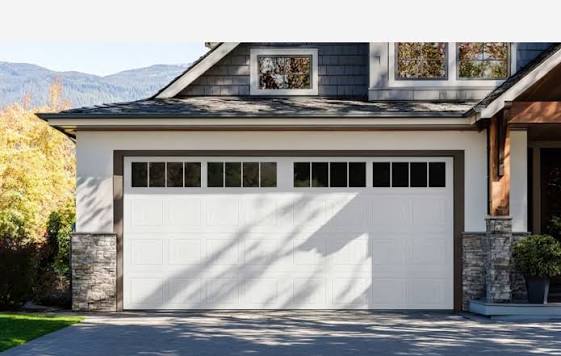
Damage becomes more concerning when it changes how the door moves.
Bent sections can create uneven stress. Significant impact can affect tracks or hardware. A door may begin binding, rubbing, shaking, or leaving gaps when closed. Once damage spreads beyond one replaceable area, the cost and complexity of restoring the system can increase quickly.
This is where homeowners should resist judging the problem solely by how ugly a dent looks. A large-looking dent may be manageable, while a less noticeable structural issue could be much more important.
Energy efficiency is another factor that tends to enter the conversation with older garage doors. Attached garages in particular can influence the comfort of nearby rooms. If an old door has poor insulation, damaged weather stripping, or large gaps around its edges, outside temperatures can make their presence known.
Replacing weather seals or correcting smaller gaps may provide a noticeable improvement without requiring a new door. If the door itself is structurally sound and already provides suitable insulation, repairing these areas can be an easy win.
On the other hand, an older, poorly insulated door may offer limited opportunities for meaningful improvement. Homeowners who use the garage as a workshop, exercise area, hobby space, or regular entry point may notice the difference more than someone who simply parks a vehicle there. In those situations, replacement with a better-insulated modern door can contribute to comfort as well as reliability.
Everyday convenience matters too.
Garage doors often operate several times each day, which means small frustrations become surprisingly irritating. Waiting for a sluggish door every morning is one thing. Wondering whether it will open at all is another. Repeatedly adjusting sensors, dealing with inconsistent remotes, listening to excessive rattling, or manually helping a troublesome system along can gradually turn a basic household feature into a daily nuisance.
If one repair eliminates those frustrations, there is little reason to replace a good door unnecessarily. But if unreliable operation continues after repeated service, the value of replacement starts extending beyond the hardware itself. Reliability has value. So does getting into the car without wondering whether today’s schedule is about to be interrupted by the garage door. Comparing the cost of immediate repairs with the potential for future breakdowns can make deciding whether to repair or replace your garage door much easier.
Appearance can influence the choice as well, although it tends to be a secondary consideration when the existing door remains functional. Garage doors occupy a substantial portion of many home exteriors. Faded finishes, rust, outdated designs, cracked windows, and damaged panels can affect curb appeal more than homeowners initially realize.
If the door operates beautifully and simply looks tired, refinishing or replacing a damaged section may be enough. There is little practical reason to discard a dependable system solely because the finish needs attention.
The equation changes when cosmetic deterioration arrives alongside mechanical problems. Paying for repairs, refinishing, replacement panels, new seals, and other improvements separately may eventually approach the cost of a more comprehensive replacement. At that point, investing in a new door can address appearance, operation, insulation, and reliability at the same time.
Homeowners should also distinguish between the garage door and the garage door opener. They work together every day, so it is easy to treat them as one unit, but they are separate systems. A failing opener does not necessarily mean the physical door needs replacement.
If the door can be operated properly when disconnected from the opener, the problem may be isolated to the automatic opening system. Repairing or replacing the opener while keeping the existing door can be a perfectly sensible solution.
Likewise, installing a new opener does not fix structural problems with the door itself. An automatic opener should not have to compensate for a door that is excessively heavy, poorly balanced, damaged, or difficult to move. Addressing the actual source of the problem protects both systems from unnecessary strain.
Then comes the question homeowners understandably care about most: money.
The cheapest option today is not always the least expensive option over the next several years. Imagine a repair that costs considerably less than replacement and is expected to restore reliable operation. If the rest of the system is healthy, choosing that repair is fairly straightforward.
Now imagine the same repair on a significantly older door that has already required several service calls. Another component may need attention soon, followed by another. Individually, each repair may appear affordable. Together, they can become a substantial investment in a system that continues to deteriorate.
Keep a simple record of repairs and maintenance. Dates, problems, parts replaced, and costs can reveal patterns that are easy to miss when expenses occur months apart. What feels like “a repair here and there” may look very different when the numbers are placed next to each other.
It is equally important not to replace a door just because someone describes it as old. Well-maintained equipment does not suddenly become useless on a particular birthday. Condition is more meaningful than age alone.
A garage door that is older but structurally sound, balanced, safe, and dependable may continue serving the home perfectly well. Preventive maintenance can help extend that service life by catching worn components before they create larger problems.
Listen to the door during normal operation. New scraping, popping, grinding, or squealing sounds deserve attention. Watch whether movement remains smooth and even. Look for frayed cables, damaged panels, deteriorated seals, loose hardware, rust, or unusual gaps. Test safety features according to manufacturer guidance and arrange professional inspection when something does not seem right.
There are also jobs that should not become weekend experiments. Garage door springs and cables can store substantial energy, and improper handling can cause serious injury or additional property damage. Basic visual checks and routine homeowner maintenance are one thing. Repairs involving high-tension components are better left to trained professionals with appropriate equipment.
When asking for an assessment, request more than a simple repair quote. Ask what caused the failure, what condition the remaining components are in, and whether other significant repairs are likely in the near future. A useful evaluation should help clarify the condition of the whole system rather than merely address the loudest symptom.
Ultimately, the smarter choice comes from looking at the garage door as a complete system.
Repair usually makes sense when the damage is isolated, the door is structurally sound, safety can be fully restored, and the repair is likely to provide dependable service without triggering a chain of additional expenses. This is particularly true for younger doors and systems that have otherwise performed reliably.
Replacement becomes more attractive when structural damage is widespread, safety is compromised, breakdowns have become frequent, energy performance is poor, or the combined cost of keeping an aging door operational is becoming difficult to justify. It can also make sense when homeowners want to solve several concerns at once, such as reliability, insulation, appearance, and outdated operation.
There is no prize for keeping an unreliable garage door alive forever, but there is also no reason to replace a perfectly serviceable system because one component failed. The goal is not to choose the biggest project. It is to choose the solution that leaves the home with a safe, dependable, convenient garage door at a reasonable long-term cost.
Sometimes that means a brand-new installation. Quite often, though, a well-targeted repair is all that stands between a frustrating morning and a garage door that quietly returns to doing its job for years to come.
…